Pectinase Apple Juice Experiment: Formulating for Higher Juice Extraction
Run a pectinase apple juice experiment with practical dosage, pH, temperature, QC, and supplier guidance for industrial juice formulations.
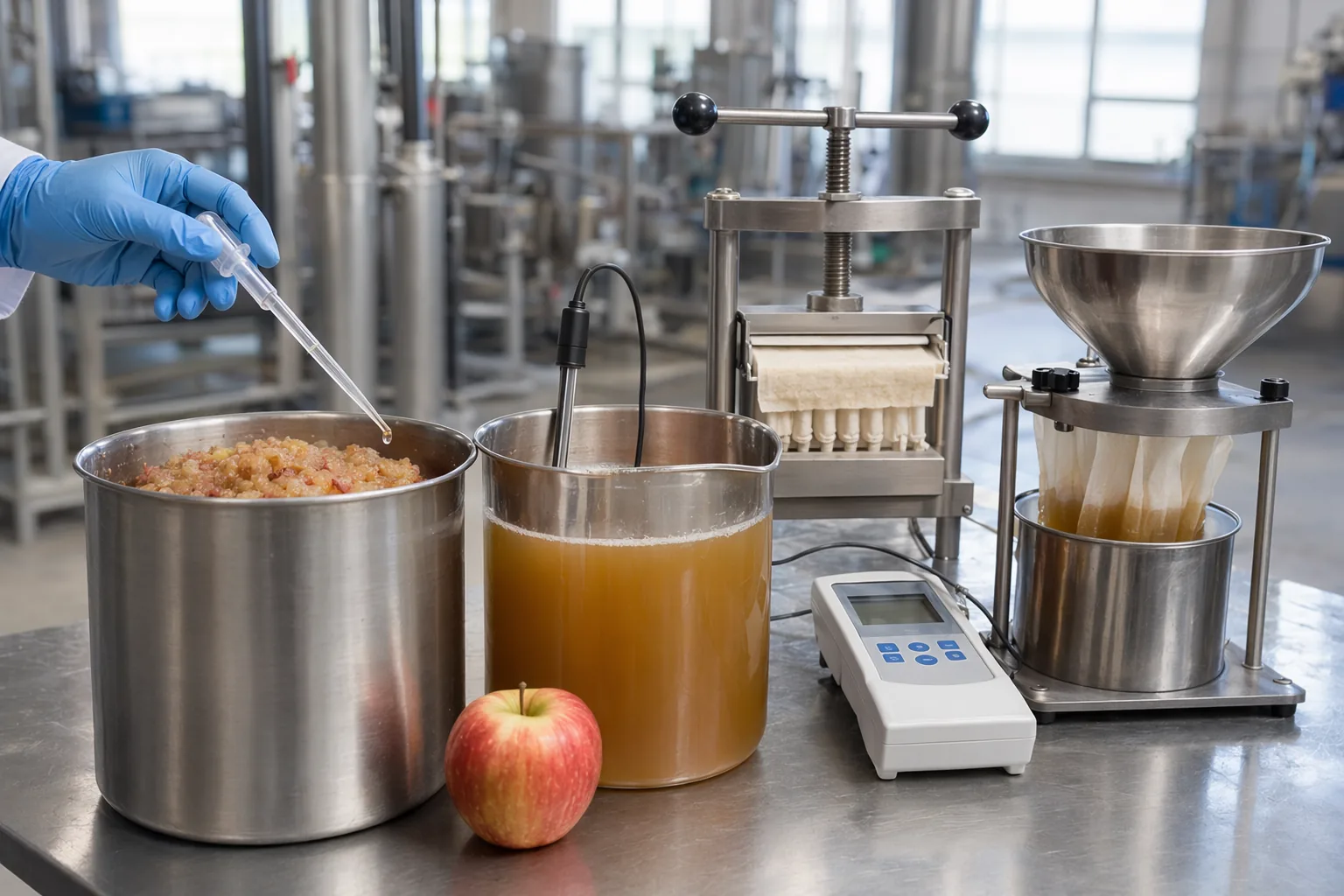
Use Pectinase Concentrate to evaluate apple mash depectinization, juice yield, viscosity reduction, clarification response, and cost-in-use before scaling production.
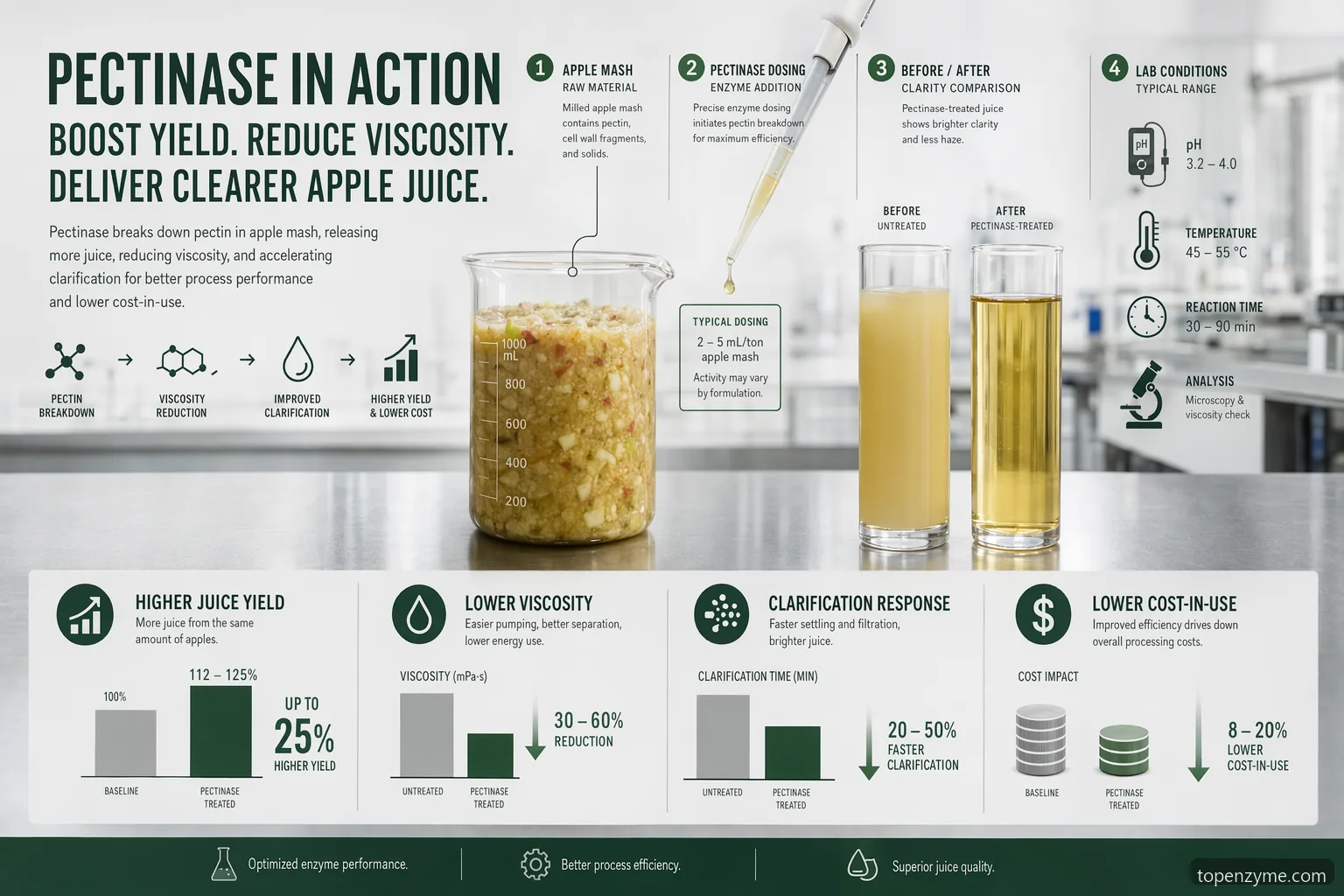
Why Run a Pectinase Apple Juice Experiment?
A pectinase apple juice experiment helps formulation teams quantify how pectinase changes mash behavior before committing to plant-scale dosage. Apples contain pectin in cell walls and middle lamella, which can trap liquid, increase viscosity, slow pressing, and reduce filtration efficiency. A well-designed bench trial with Pectinase Concentrate compares an untreated control with several enzyme levels, allowing the processor to measure the effect of pectinase on apple juice extraction under realistic conditions. The goal is not simply maximum enzyme addition, but the best balance of juice yield, clarification response, process time, flavor retention, and cost-in-use. For B2B juice processors, the same experiment can support purchasing decisions, supplier qualification, and validation of a new pectinase enzyme in an existing extraction line. Results should be documented with raw material details, processing parameters, analytical checks, and observations on press cake dryness and downstream filtration.
Use the same apple lot for all treatments. • Include an untreated control for valid comparison. • Track both yield improvement and processing efficiency. • Record all variables that affect enzyme performance.
Recommended Conditions for Pectinase in Apple Juice
For extracting apple juice with pectinase, most trials start with crushed apple mash adjusted within the enzyme supplier’s recommended pH and temperature window. A practical screening range is pH 3.2 to 4.2, which aligns with many apple mashes, and 35 to 50°C when thermal handling is compatible with product quality. Contact time is commonly 30 to 120 minutes, depending on mash consistency, enzyme activity, and production targets. Dosage is best expressed as product weight per metric ton of mash or as activity units, based on the TDS. A typical initial screen may include 0, 50, 100, and 200 g per metric ton of mash, then refine around the most economical result. Because pectinase concentration apple juice experiment outcomes depend on enzyme activity, apple variety, and process design, final use levels should be confirmed by pilot validation rather than copied from generic literature.
Screen multiple dosages instead of relying on one rate. • Keep pH and temperature constant across treatments. • Use supplier activity data to compare products fairly. • Avoid excessive holding that may affect sensory quality.
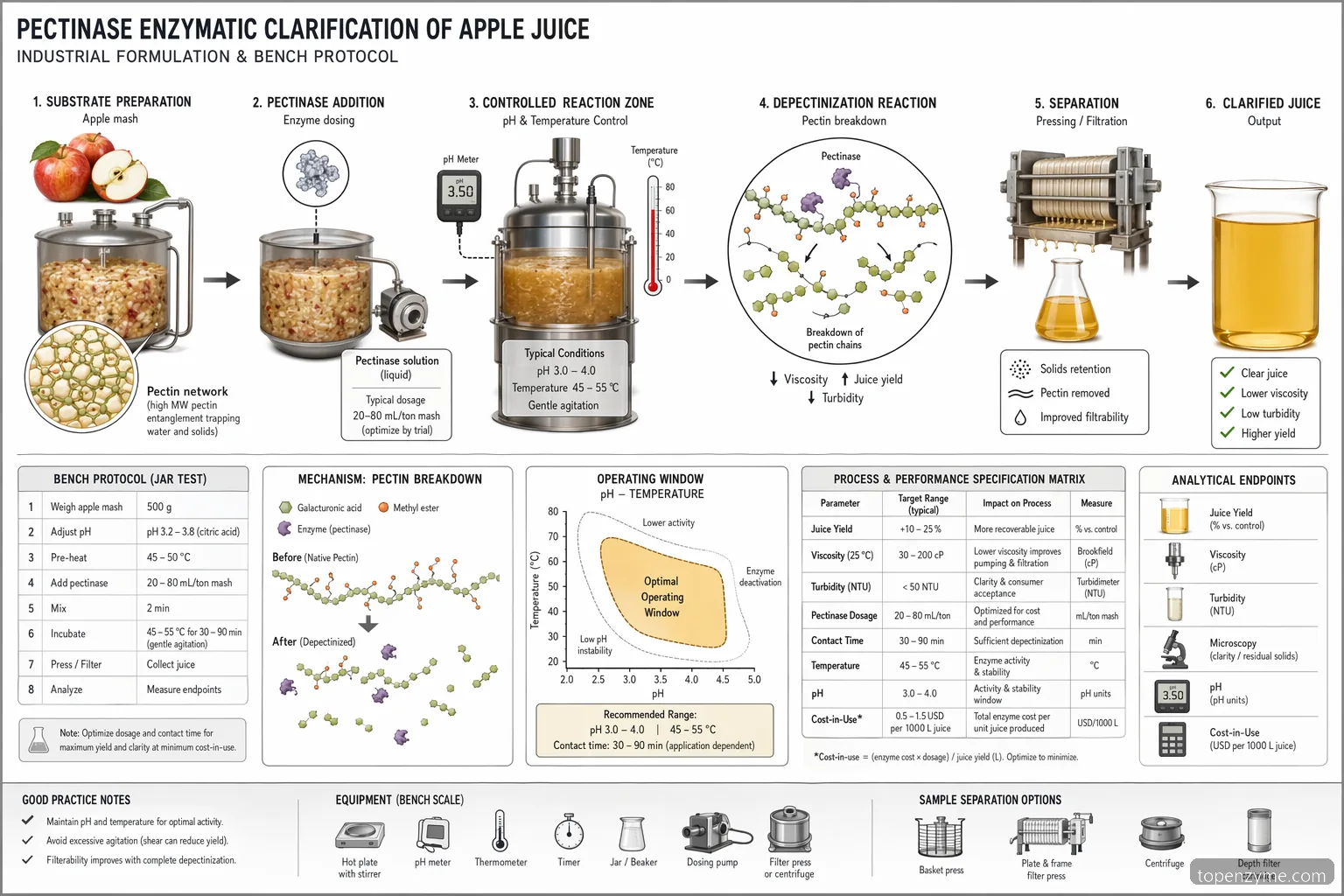
Bench Protocol for Extracting Apple Juice with Pectinase
A simple bench protocol can provide reliable pectinase apple juice experiment results when sampling and timing are tightly controlled. Prepare a uniform apple mash using the same grinder setting, then divide it into equal test portions by weight. Warm each portion to the target temperature, check pH, and add the diluted Pectinase Concentrate while mixing thoroughly. Hold samples in closed vessels to limit evaporation and oxidation, agitating gently at set intervals. After the reaction time, press each sample using the same pressure, press duration, and cloth or filter setup. Collect free-run and pressed juice separately if that reflects the factory process. Measure recovered juice weight, calculate yield as a percentage of mash weight, and note press cake appearance. To reduce random error, run duplicate or triplicate samples, especially when comparing close dosage levels or evaluating a new polygalacturonase-rich formulation.
Weigh mash, enzyme solution, juice, and press cake accurately. • Use identical pressing conditions for every treatment. • Prepare enzyme dilutions immediately before use. • Run replicates to confirm repeatability.
Interpreting Pectinase Apple Juice Experiment Results
Useful pectinase apple juice experiment results should include more than total juice volume. In industrial juice extraction, the best treatment is often the one that improves yield while reducing viscosity, improving pressability, and supporting efficient clarification or filtration. Measure turbidity, viscosity, soluble solids, pH, acidity, and filtration time where equipment is available. A simple alcohol test or pectin test can indicate whether residual pectin may interfere with clarification. Compare each enzyme level against the control and calculate incremental value, not just absolute yield. If 100 g per metric ton produces nearly the same yield as 200 g, the lower dosage may offer better cost-in-use. Also watch for process tradeoffs such as over-maceration, excessive suspended solids, or difficult sludge handling. These observations are important when translating bench results to decanter, belt press, hydraulic press, or membrane filtration systems.
Calculate percent yield increase versus untreated mash. • Track filtration rate and turbidity after treatment. • Check for residual pectin before final clarification. • Evaluate cost per additional liter of juice recovered.
Scaling Up and Qualifying a Pectinase Supplier
Before placing routine production orders, industrial buyers should confirm that the selected pectinase enzyme is supported by technical documentation and consistent supply. Request a current COA for the lot offered, a TDS describing activity, use conditions, storage, and dosage guidance, and an SDS for safe handling and worker training. Pilot validation should be run at a scale large enough to reflect real mixing, heat transfer, residence time, and press loading. During supplier qualification, compare activity basis, batch-to-batch consistency, lead time, packaging, shelf-life, allergen or regulatory statements where applicable, and technical support responsiveness. Cost-in-use should include dosage, yield gain, reduced pressing time, filtration savings, waste reduction, and any changes to clarification aids. A strong supplier helps translate pectinase and apple juice bench findings into a robust commercial extraction formulation without relying on unverifiable performance claims.
Request COA, TDS, and SDS before approval. • Validate dosage in pilot or production-scale trials. • Assess supply reliability and batch consistency. • Compare total cost-in-use, not only enzyme price.
Technical Buying Checklist
Buyer Questions
Pectinase breaks down pectin structures in apple mash, helping release trapped juice and reduce viscosity. In a pectinase apple juice experiment, this can improve pressability, increase recovered juice, and support downstream clarification. The exact effect depends on apple variety, maturity, mash size, dosage, pH, temperature, and contact time, so results should be confirmed with controlled bench and pilot trials.
A practical formulation screen is an untreated control plus several dosage levels, such as 50, 100, and 200 g of Pectinase Concentrate per metric ton of apple mash. The final pectinase concentration apple juice experiment recommendation should be based on the supplier TDS, enzyme activity, actual mash conditions, yield data, filtration behavior, and cost-in-use rather than a fixed universal rate.
Measure juice yield by weight, then compare each enzyme treatment against the untreated control. Also record press cake weight, viscosity, turbidity, soluble solids, pH, acidity, filtration time, and any residual pectin test result. Strong pectinase apple juice experiment results show both process and economic value, such as higher recovery, faster pressing, easier filtration, or reduced clarification load.
Yes, pectinase is commonly added to crushed apple mash after grinding, but it should be diluted and mixed evenly for consistent contact. The mash should be within the recommended pH and temperature range before dosing. Processors should avoid localized overdosing, poor mixing, or uncontrolled holding times, because these variables can distort trial results and make scale-up less reliable.
Industrial buyers should request a current COA, TDS, SDS, activity basis, storage conditions, shelf-life, packaging options, and lot traceability information. For supplier qualification, also ask for pilot sample support, batch consistency data, lead time expectations, and technical guidance. The purchase decision should consider validated performance and cost-in-use, not only the quoted price per kilogram.
Related Search Themes
pectinase, pectinase concentration apple juice experiment, pectinase apple juice experiment results, pectinase apple juice, pectinase and apple juice, effect of pectinase on apple juice extraction
Pectinase (Concentrate) for Research & Industry
Need Pectinase (Concentrate) for your lab or production process?
ISO 9001 certified · Food-grade & research-grade · Ships to 80+ countries
Frequently Asked Questions
What does pectinase do in an apple juice extraction trial?
Pectinase breaks down pectin structures in apple mash, helping release trapped juice and reduce viscosity. In a pectinase apple juice experiment, this can improve pressability, increase recovered juice, and support downstream clarification. The exact effect depends on apple variety, maturity, mash size, dosage, pH, temperature, and contact time, so results should be confirmed with controlled bench and pilot trials.
What pectinase concentration should be used in an apple juice experiment?
A practical formulation screen is an untreated control plus several dosage levels, such as 50, 100, and 200 g of Pectinase Concentrate per metric ton of apple mash. The final pectinase concentration apple juice experiment recommendation should be based on the supplier TDS, enzyme activity, actual mash conditions, yield data, filtration behavior, and cost-in-use rather than a fixed universal rate.
How should pectinase apple juice experiment results be measured?
Measure juice yield by weight, then compare each enzyme treatment against the untreated control. Also record press cake weight, viscosity, turbidity, soluble solids, pH, acidity, filtration time, and any residual pectin test result. Strong pectinase apple juice experiment results show both process and economic value, such as higher recovery, faster pressing, easier filtration, or reduced clarification load.
Can pectinase be added directly to crushed apple mash?
Yes, pectinase is commonly added to crushed apple mash after grinding, but it should be diluted and mixed evenly for consistent contact. The mash should be within the recommended pH and temperature range before dosing. Processors should avoid localized overdosing, poor mixing, or uncontrolled holding times, because these variables can distort trial results and make scale-up less reliable.
What should buyers request from a pectinase supplier?
Industrial buyers should request a current COA, TDS, SDS, activity basis, storage conditions, shelf-life, packaging options, and lot traceability information. For supplier qualification, also ask for pilot sample support, batch consistency data, lead time expectations, and technical guidance. The purchase decision should consider validated performance and cost-in-use, not only the quoted price per kilogram.
Ready to source?
Turn This Guide Into a Supplier Brief Request a Pectinase Concentrate sample, COA, TDS, and formulation support for your apple juice extraction trial.
Contact Us to Contribute