Pectinase Apple Juice Experiment Results for Industrial Extraction
Compare pectinase apple juice experiment results, dosage, pH, temperature, QC, and scale-up steps for industrial juice extraction.
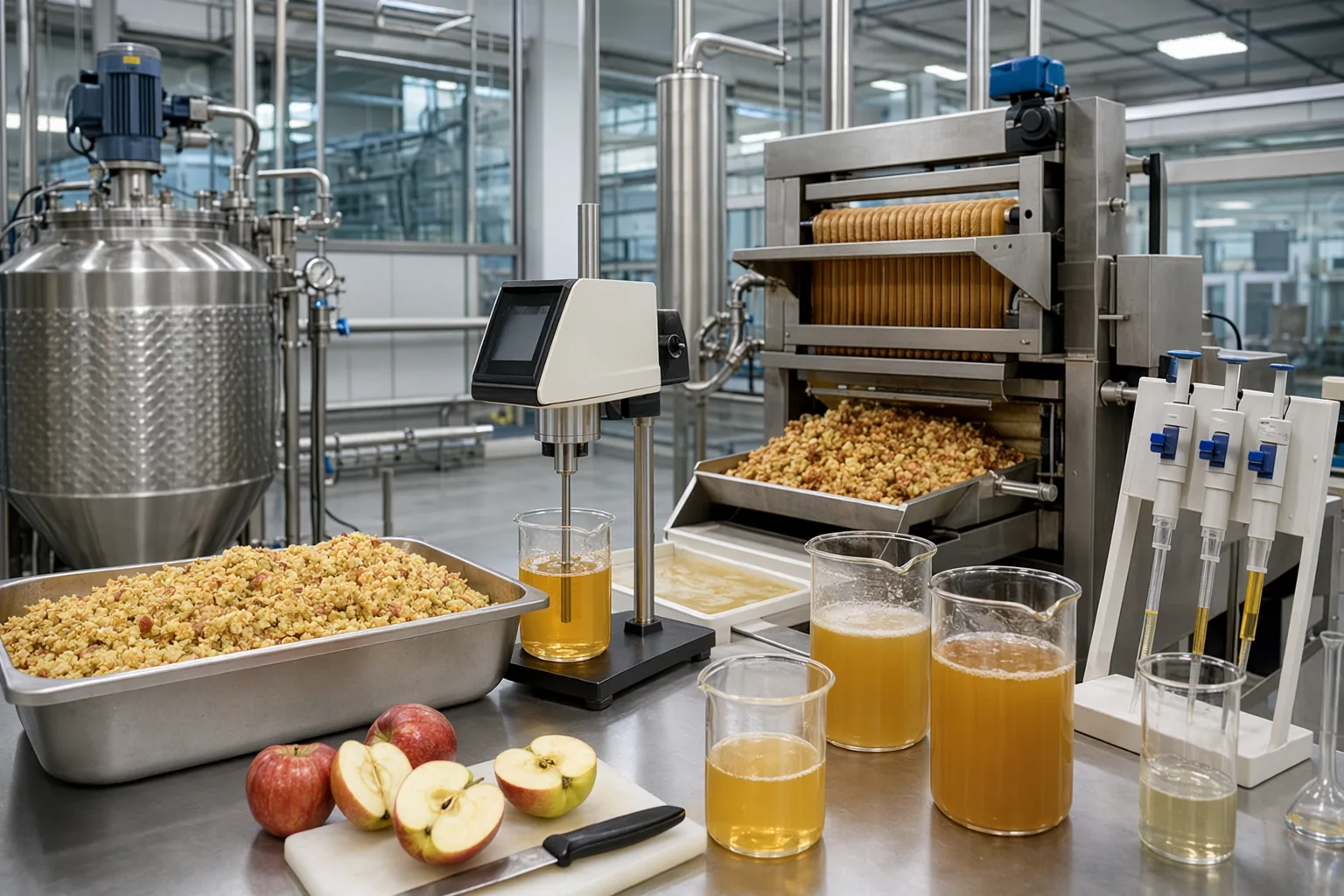
Use pectinase apple juice experiment results to translate lab yield gains into controlled, cost-effective juice extraction parameters for commercial processing.
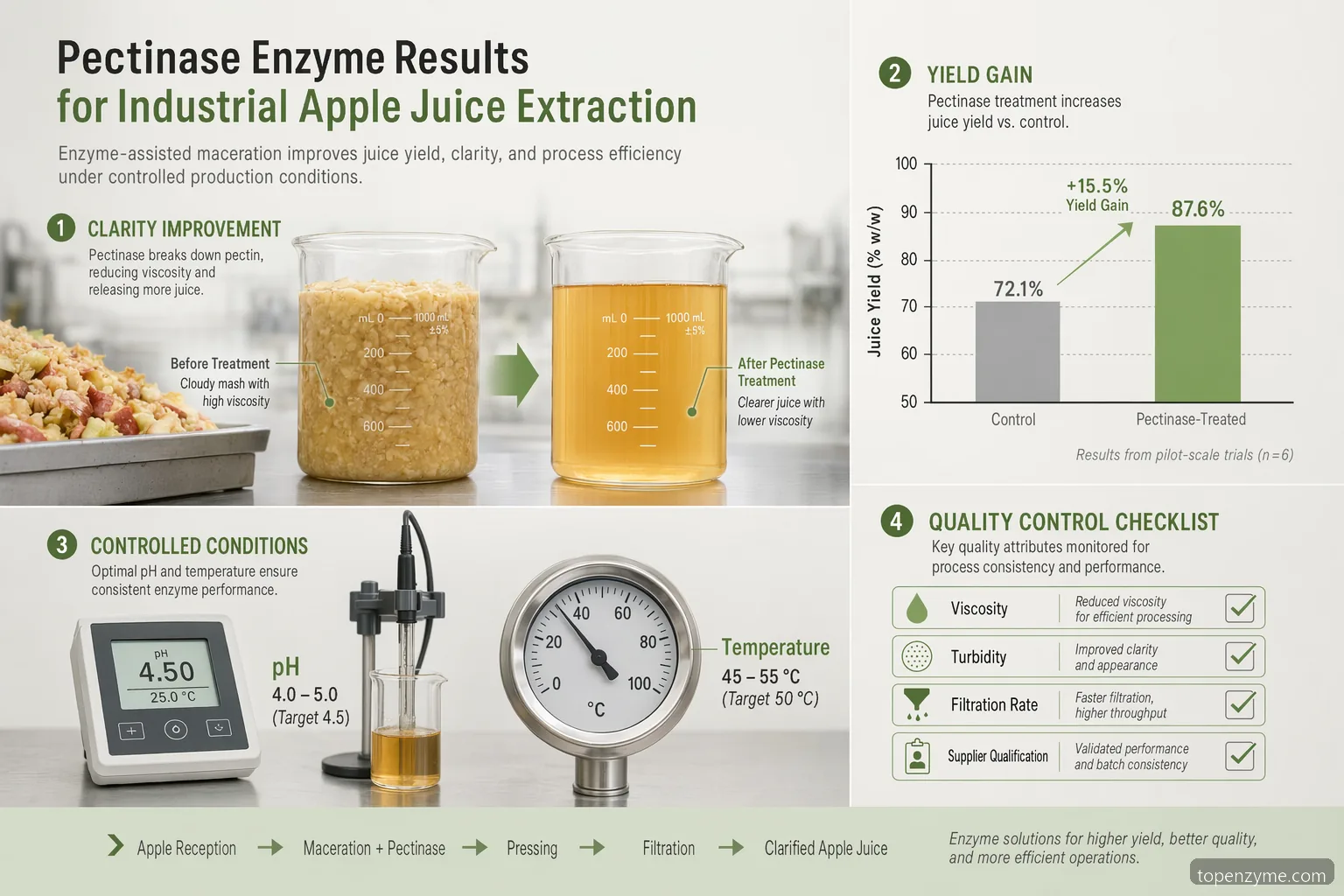
Why pectinase changes apple juice extraction results
In a pectinase apple juice experiment, the primary measurable change is usually improved juice release from crushed apple mash. Apples contain soluble and insoluble pectic substances that hold water, increase mash viscosity, and reduce pressing efficiency. A pectinase enzyme preparation, often containing polygalacturonase and related pectinolytic activities, hydrolyzes pectin chains and weakens the plant cell wall matrix. For processors, the practical result can be higher free-run juice, shorter press cycles, lower pomace moisture, and more predictable clarification. The effect of pectinase on apple juice extraction depends on cultivar, ripeness, mash particle size, contact time, temperature, pH, and enzyme activity. Therefore, a single beaker result should not be treated as a production guarantee. The best approach is a structured pectinase concentration apple juice experiment that compares an untreated control against multiple dosage levels under the same mash, time, and press conditions.
Main benefit: lower pectin-related viscosity in apple mash • Key enzyme activity: polygalacturonase, often supported by other pectinases • Best comparison: untreated control versus graded enzyme dosages
Suggested lab design for pectinase and apple juice trials
A useful pectinase apple juice experiment should be simple, repeatable, and aligned with plant conditions. Prepare one well-mixed apple mash batch, then divide it into equal test portions. Include a no-enzyme control and at least three pectinase dosage levels. For screening, many processors test within a practical band such as 50–300 g/metric ton of mash for concentrated liquid or powder products, then adjust based on the supplier’s TDS activity statement. Maintain pH near the natural apple range, commonly 3.2–4.2, unless the process uses acid adjustment. Incubate at 40–55°C when compatible with product quality goals and plant equipment. Contact times of 30–90 minutes are often sufficient for screening. After incubation, press each sample using the same pressure, time, and filter medium. Record juice mass, press cake mass, viscosity, turbidity, Brix, pH, and sensory observations.
Use the same mash source for all treatments • Run duplicates or triplicates when possible • Keep pressing conditions identical across samples • Document exact enzyme lot, dosage, time, pH, and temperature
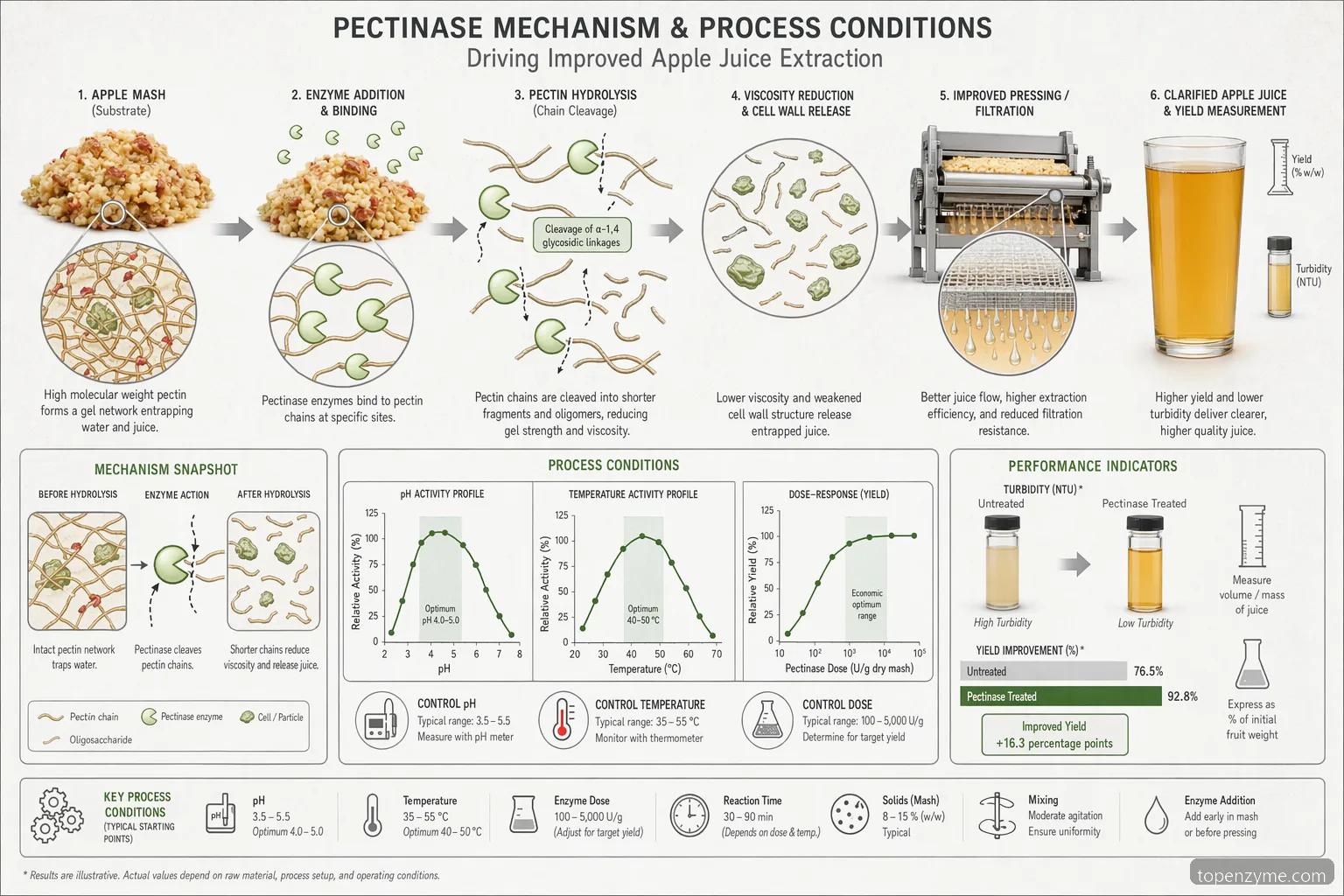
Interpreting pectinase apple juice experiment results
Good pectinase apple juice experiment results are not defined by yield alone. A higher juice weight may be valuable, but only if quality and downstream performance remain acceptable. Compare percent yield against the control, then calculate incremental juice recovery per enzyme cost. Also review viscosity reduction, because lower viscosity can improve pumping, heat transfer, and clarification. Turbidity results require context: pectinase in apple juice can initially release fine particles, while later clarification may improve after settling, filtration, or fining. Brix should remain consistent unless dilution or concentration errors occurred. If a higher pectinase concentration apple juice experiment shows little extra yield beyond a mid-level dose, the lower dose may offer better cost-in-use. Results should be considered preliminary until confirmed in a pilot press using the same apple varieties, milling profile, hold tank geometry, and processing schedule used in production.
Compare yield gain versus untreated control • Check whether higher dosage gives diminishing returns • Evaluate clarification and filtration, not only press yield • Confirm lab findings through pilot validation
Process conditions for extracting apple juice with pectinase
Extracting apple juice with pectinase works best when conditions match the enzyme’s activity window and the processor’s quality targets. Apple mash is naturally acidic, which suits many commercial pectinase products. A practical starting pH is 3.2–4.2, with temperature commonly screened at 40–55°C. Higher temperatures may accelerate reaction, but processors must protect aroma, color, and microbial control requirements. Enzyme dosage should be based on product activity, mash pectin load, holding time, and desired throughput. Overdosing may not damage the process, but it can reduce margin if the added yield or press capacity does not justify the cost. After treatment, pressing should occur promptly and consistently. For cloudy juice, evaluate mouthfeel and haze stability. For clear juice or concentrate, measure viscosity, turbidity, filterability, and pectin-negative status using an appropriate pectin test before evaporation or final filtration.
Common screening pH: 3.2–4.2 • Common screening temperature: 40–55°C • Typical screening contact time: 30–90 minutes • Optimize dosage by activity and cost-in-use
QC checks buyers should require before scale-up
Industrial buyers should connect pectinase apple juice experiment results with supplier documentation and incoming quality control. Request a current COA for each lot, a TDS showing activity definition and recommended use range, and an SDS covering safe storage and handling. The COA should identify lot number, appearance, declared activity or specification, and any relevant microbiological or impurity limits offered by the supplier. In plant trials, verify enzyme performance using a retained control sample and standardized measurements. Useful QC checks include pH, Brix, viscosity, turbidity, juice yield, pomace moisture, pectin test result, and filtration rate. Storage conditions matter because enzyme activity can decline with excessive heat or long exposure to moisture. If production uses clean-label or export-sensitive specifications, confirm ingredient declaration, carrier system, allergen statements, and regulatory suitability with the supplier before commercial purchase.
Request COA, TDS, and SDS before ordering • Retain reference samples during pilot trials • Check storage temperature and shelf-life guidance • Confirm ingredient and regulatory suitability for target markets
How to qualify a pectinase supplier for juice production
Supplier qualification should move beyond price per kilogram. For pectinase apple juice applications, buyers should compare cost-in-use: enzyme dose, activity, yield improvement, press capacity gains, filtration savings, and waste reduction. Ask whether the supplier can support pilot validation, dosage optimization, and troubleshooting for apple variety changes or seasonal pectin variation. Review batch-to-batch consistency through COA history and retain-sample practices. Logistics also matter, including lead time, packaging size, storage requirements, and documentation responsiveness. A reliable pectinase supplier should provide clear technical guidance without promising identical results in every plant. For larger juice processors, a staged program is recommended: bench test, pilot press, extended plant trial, then commercial purchase specification. This reduces risk and helps purchasing, production, QA, and finance agree on the real value of the enzyme program.
Evaluate cost-in-use, not only unit price • Ask for pilot validation and technical support • Review COA consistency across multiple lots • Define a commercial purchase specification after trials
Technical Buying Checklist
Buyer Questions
Typical pectinase apple juice experiment results include improved juice release, reduced mash viscosity, faster pressing, and sometimes better downstream clarification. The exact yield gain depends on apple variety, maturity, milling, temperature, pH, contact time, and enzyme dosage. Always compare against an untreated control and calculate cost-in-use, because the highest dosage is not always the most economical option.
For bench screening, processors often compare a no-enzyme control with several pectinase concentration levels, such as 50, 150, and 300 g per metric ton of apple mash for a concentrated product. The correct range depends on the enzyme activity stated in the TDS. Use equal mash weights, identical incubation conditions, and the same pressing method for meaningful results.
Many pectinase products used in apple juice extraction perform well in the natural apple pH range, commonly about 3.2–4.2. A practical temperature screening range is 40–55°C. Confirm the exact activity window from the supplier’s TDS, because enzyme blends differ. Processing conditions should also protect color, aroma, microbial control, and downstream concentration or filtration steps.
Measure juice yield as a percentage of mash weight, then compare treated samples with the control. Also record pomace moisture, mash or juice viscosity, turbidity, Brix, pH, filtration rate, and pectin test results. These data show whether pectinase apple juice treatment improves the whole process, not just liquid recovery during pressing.
Before purchase, request a COA for the supplied lot, a TDS with activity definition and application guidance, and an SDS for safe handling and storage. For supplier qualification, also ask about batch consistency, shelf life, packaging, lead time, pilot validation support, and ingredient declaration requirements for your target juice markets.
Related Search Themes
pectinase, pectinase concentration apple juice experiment, pectinase apple juice experiment, pectinase apple juice, pectinase and apple juice, effect of pectinase on apple juice extraction
Pectinase (Concentrate) for Research & Industry
Need Pectinase (Concentrate) for your lab or production process?
ISO 9001 certified · Food-grade & research-grade · Ships to 80+ countries
Frequently Asked Questions
What results should I expect from a pectinase apple juice experiment?
Typical pectinase apple juice experiment results include improved juice release, reduced mash viscosity, faster pressing, and sometimes better downstream clarification. The exact yield gain depends on apple variety, maturity, milling, temperature, pH, contact time, and enzyme dosage. Always compare against an untreated control and calculate cost-in-use, because the highest dosage is not always the most economical option.
What is a practical pectinase concentration for an apple juice experiment?
For bench screening, processors often compare a no-enzyme control with several pectinase concentration levels, such as 50, 150, and 300 g per metric ton of apple mash for a concentrated product. The correct range depends on the enzyme activity stated in the TDS. Use equal mash weights, identical incubation conditions, and the same pressing method for meaningful results.
Which pH and temperature are suitable for pectinase in apple juice?
Many pectinase products used in apple juice extraction perform well in the natural apple pH range, commonly about 3.2–4.2. A practical temperature screening range is 40–55°C. Confirm the exact activity window from the supplier’s TDS, because enzyme blends differ. Processing conditions should also protect color, aroma, microbial control, and downstream concentration or filtration steps.
How do I measure the effect of pectinase on apple juice extraction?
Measure juice yield as a percentage of mash weight, then compare treated samples with the control. Also record pomace moisture, mash or juice viscosity, turbidity, Brix, pH, filtration rate, and pectin test results. These data show whether pectinase apple juice treatment improves the whole process, not just liquid recovery during pressing.
What documents should a pectinase supplier provide for B2B purchase?
Before purchase, request a COA for the supplied lot, a TDS with activity definition and application guidance, and an SDS for safe handling and storage. For supplier qualification, also ask about batch consistency, shelf life, packaging, lead time, pilot validation support, and ingredient declaration requirements for your target juice markets.
Ready to source?
Turn This Guide Into a Supplier Brief Request Pectinase Concentrate documentation and pilot-trial support for your apple juice extraction process.
Contact Us to Contribute