Enzyme Pectinase Fruit Juice Production: Dosage, pH, and Temperature
Troubleshoot pectinase juice extraction with practical dosage, pH, temperature, QC, pilot validation, and supplier qualification guidance.
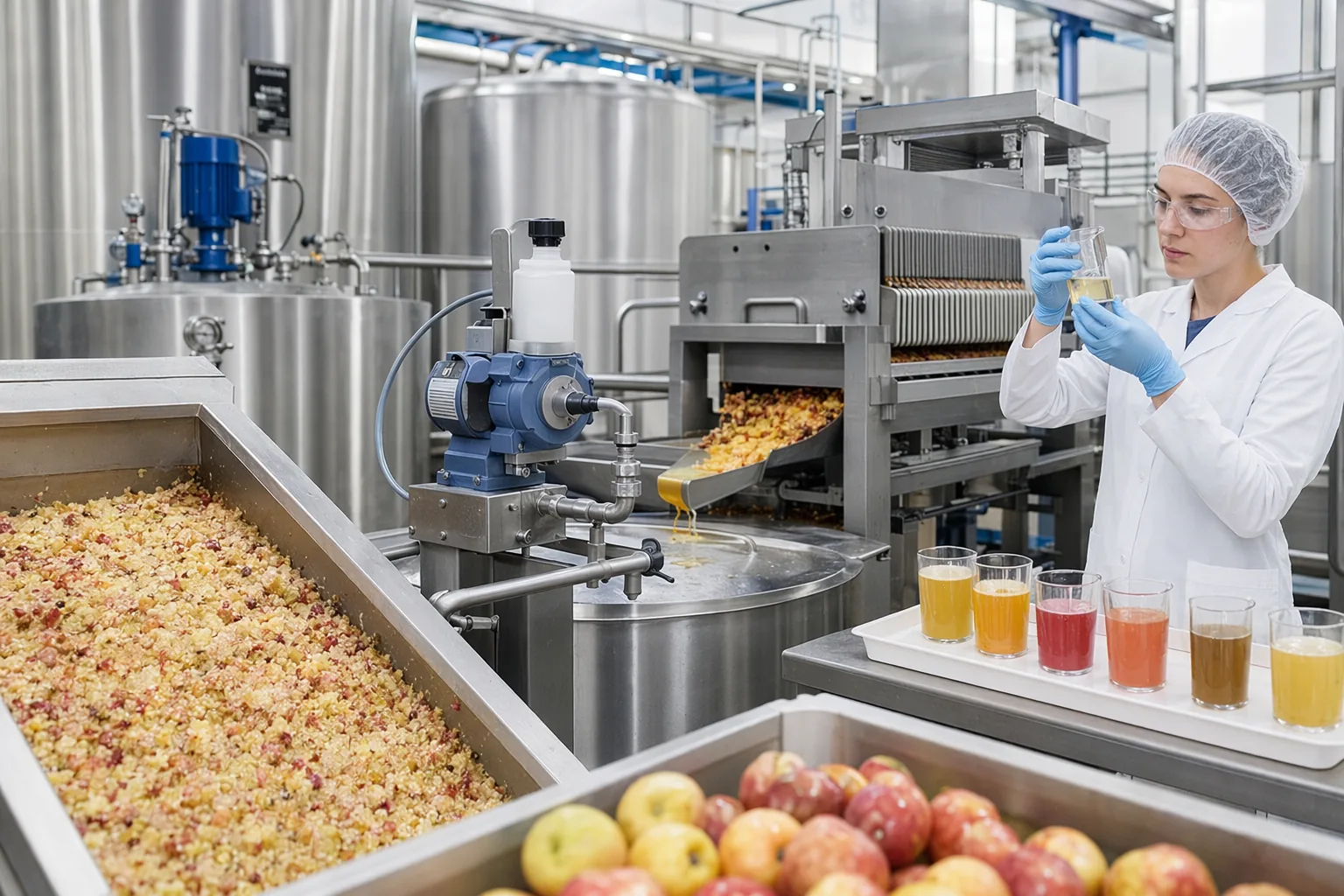
Improve juice yield, pressing speed, clarification, and process consistency with practical guidance for using pectinase concentrate in industrial fruit juice extraction.
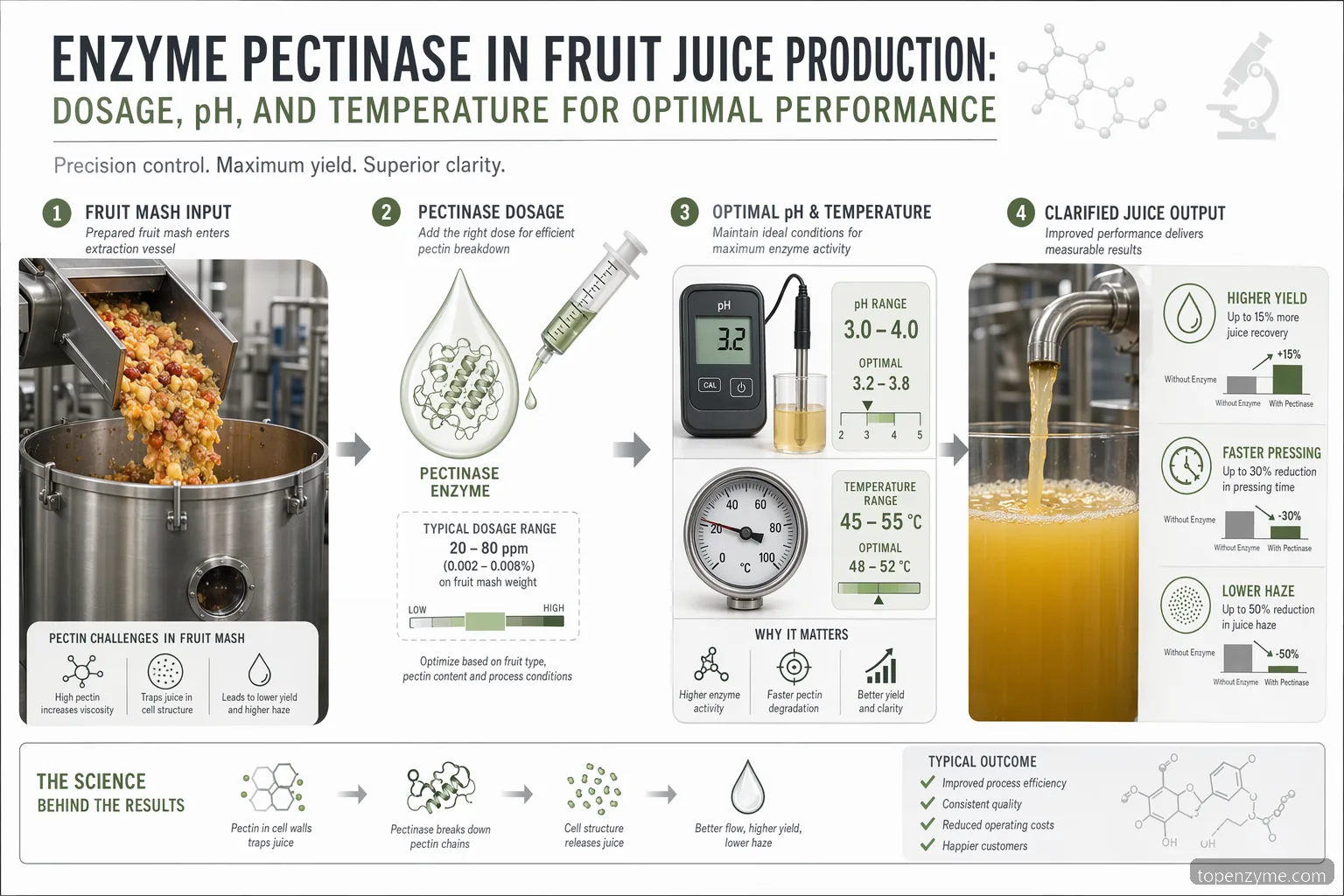
Why pectinase matters in juice extraction
Pectinase is an industrial enzyme system used to hydrolyze pectin in fruit mash, pulp, or expressed juice. In enzyme pectinase fruit juice production, the goal is not simply to add more enzyme, but to match enzyme activity with fruit type, pectin load, process temperature, pH, contact time, and downstream clarification targets. Apples, berries, grapes, citrus byproducts, tropical fruits, and stone fruits can all respond differently because their pectin structure and pulp viscosity vary. A well-selected pectinase concentrate can support higher free-run yield, faster pressing, better depectinization, lower haze risk, and more stable filtration performance. For B2B processors, the value should be measured by cost-in-use rather than drum price alone. That means tracking enzyme dosage, added yield, reduced press cycle time, reduced filter aid demand, and fewer clarification failures.
Primary use: maceration, extraction, clarification, and viscosity reduction • Common enzyme activity: polygalacturonase with supporting pectin-degrading activities • Best results come from process validation, not one-size-fits-all dosing
Starting dosage, pH, and temperature ranges
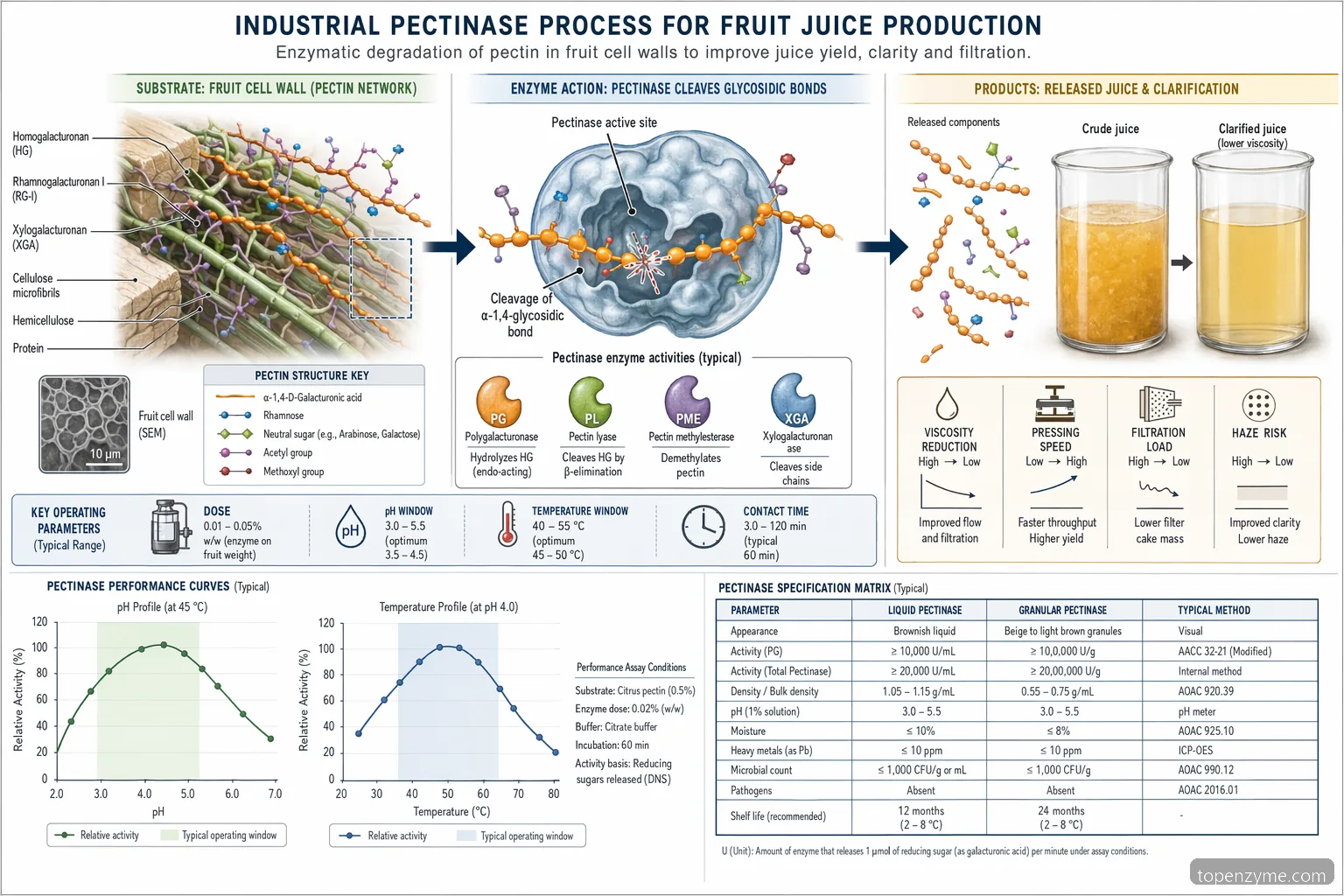
For pectinase in fruit juice production, a practical screening trial often begins with the supplier TDS dosage range, then narrows the dose by fruit variety and plant economics. As a general industrial starting point, many processors evaluate about 20-150 g or mL of pectinase concentrate per metric ton of mash or juice, depending on enzyme activity, formulation strength, and substrate. Typical working pH is about 3.0-4.5 for many fruit systems, with temperature commonly screened between 40-55 °C when the process allows heating. Lower temperatures may still work but usually require longer contact time or higher dose. Excessive heat can reduce enzyme activity, while pasteurization after treatment can be used to stop activity. Always confirm limits from the TDS and validate in pilot batches before full-scale use.
Trial dosage: commonly 20-150 g or mL per metric ton, adjusted by activity • Typical pH screen: 3.0-4.5 • Typical temperature screen: 40-55 °C • Typical contact time: 30-120 minutes, depending on fruit and target
Troubleshooting low yield or slow pressing
If pectinase juice extraction is not delivering the expected yield, start with the process variables before changing suppliers. Confirm that the enzyme was added after fruit crushing with adequate mixing and enough residence time. Cold mash, uneven dosing, incorrect dilution water, or pH outside the recommended range can leave pectin partially intact and increase press cake moisture. Check whether sulfite, preservatives, cleaning chemical residues, or excessive heat exposure may have reduced enzyme activity. For high-pectin fruit, compare two or three dosages against an untreated control and measure free-run volume, press time, final cake dryness, soluble solids, and viscosity. If yield improves at higher dosage but economics are weak, optimize temperature and contact time before increasing routine dosage.
Run treated and untreated controls in the same fruit lot • Verify actual mash temperature at the dosing point • Use calibrated dosing pumps or weighed additions • Measure cost per additional liter of recovered juice
Troubleshooting haze, viscosity, and filtration problems
The use of pectinase in fruit juice production is also important after extraction, especially when high viscosity or residual pectin slows clarification. If juice remains hazy or difficult to filter, test for incomplete depectinization using an alcohol pectin test or a validated internal QC method. Record turbidity, viscosity, filter throughput, and sediment behavior after treatment. A pectinase fruit juice process may need a different dosage for clarification than for mash treatment because enzyme contact, solids level, and target clarity are different. Avoid assuming that longer holding time always solves haze; microbial risk and production scheduling also matter. In some cases, pectinase should be combined with other approved processing aids, but compatibility must be checked by pilot validation and supplier technical review.
QC checks: turbidity, viscosity, pectin test, filtration rate • Separate extraction dose from clarification dose when needed • Confirm enzyme compatibility with fining and filtration steps
Quality documents and supplier qualification
Industrial buyers should qualify pectinase concentrate with the same discipline used for other critical process inputs. Request a current COA for each lot, a TDS showing activity definition and recommended operating window, and an SDS for handling and storage requirements. The COA should identify lot number, activity or specification basis, appearance, and relevant microbiological or chemical limits used by the supplier. Review packaging, shelf life, storage temperature, allergen or production-origin statements where relevant, and change-control practices. Do not rely on generic pectinase enzyme production claims unless the supplier can provide consistent documentation and batch traceability. For high-volume juice plants, supplier qualification should also include lead time, minimum order quantity, sample availability, technical response speed, and ability to support plant trials.
Request COA, TDS, and SDS before approval • Check activity definition and lot-to-lot consistency • Assess logistics, packaging, shelf life, and technical support
Pilot validation and cost-in-use approval
Before scaling enzyme pectinase on fruit juice production, run a pilot plan that mirrors plant conditions as closely as possible. Use the same fruit maturity, crusher settings, tank geometry, mixing, holding time, press type, and pasteurization sequence expected in production. Test at least three dosage levels plus a no-enzyme control, then calculate yield increase, throughput gain, rework reduction, and filtration savings. The best dose is rarely the highest dose; it is the lowest robust dose that meets yield, clarity, and schedule requirements across normal fruit variation. After approval, set operating limits for pH, temperature, dosing accuracy, contact time, and corrective actions. This converts pectinase from a variable additive into a controlled processing tool with predictable cost-in-use.
Use plant-representative fruit and equipment conditions • Test multiple dosages against a control • Approve based on yield, quality, throughput, and total cost-in-use • Create routine process limits for production teams
Technical Buying Checklist
Buyer Questions
The correct dosage depends on fruit type, pectin content, enzyme activity, temperature, pH, and contact time. A common industrial screening band is about 20-150 g or mL per metric ton of mash or juice, but the supplier TDS should be the starting reference. Run pilot trials at multiple dosages and approve the lowest dose that meets yield, clarity, and cost-in-use targets.
Many pectinase juice extraction processes are screened around pH 3.0-4.5 and 40-55 °C, but the optimum depends on the enzyme formulation and fruit matrix. If the process is colder, longer contact time or a higher dose may be required. Avoid exposing the enzyme to excessive heat before it has completed its function, and confirm operating limits on the TDS.
The advantages of using pectinase in fruit juice production can include improved juice release, faster pressing, lower viscosity, easier clarification, and more predictable filtration. The commercial value should be proven through plant-representative trials. Measure added yield, press cycle reduction, turbidity, viscosity, filter throughput, and any reduction in rework or filtration aids before approving routine use.
Cloudiness may come from incomplete depectinization, starch, protein-polyphenol haze, suspended pulp, microbial issues, or incompatible fining conditions. First confirm pH, temperature, dosage, mixing, and contact time. Then run a residual pectin test, turbidity measurement, and filtration comparison against a control. If pectin is not the main cause, a different clarification strategy may be required.
Request a COA for the supplied lot, a TDS with activity definition and operating recommendations, and an SDS for safe handling and storage. Buyers should also review shelf life, packaging, traceability, logistics, change-control practices, and sample availability. Supplier qualification should include technical support for pilot validation and enough consistency to support routine production planning.
Related Search Themes
pectinase, pectinase in fruit juice production, advantages of using pectinase in fruit juice production, use of pectinase in fruit juice production, enzyme pectinase on fruit juice, pectinase in juice production
Pectinase (Concentrate) for Research & Industry
Need Pectinase (Concentrate) for your lab or production process?
ISO 9001 certified · Food-grade & research-grade · Ships to 80+ countries
Frequently Asked Questions
How much pectinase should be used in fruit juice production?
The correct dosage depends on fruit type, pectin content, enzyme activity, temperature, pH, and contact time. A common industrial screening band is about 20-150 g or mL per metric ton of mash or juice, but the supplier TDS should be the starting reference. Run pilot trials at multiple dosages and approve the lowest dose that meets yield, clarity, and cost-in-use targets.
What pH and temperature are best for pectinase juice extraction?
Many pectinase juice extraction processes are screened around pH 3.0-4.5 and 40-55 °C, but the optimum depends on the enzyme formulation and fruit matrix. If the process is colder, longer contact time or a higher dose may be required. Avoid exposing the enzyme to excessive heat before it has completed its function, and confirm operating limits on the TDS.
What are the advantages of using pectinase in fruit juice production?
The advantages of using pectinase in fruit juice production can include improved juice release, faster pressing, lower viscosity, easier clarification, and more predictable filtration. The commercial value should be proven through plant-representative trials. Measure added yield, press cycle reduction, turbidity, viscosity, filter throughput, and any reduction in rework or filtration aids before approving routine use.
Why is my pectinase-treated juice still cloudy?
Cloudiness may come from incomplete depectinization, starch, protein-polyphenol haze, suspended pulp, microbial issues, or incompatible fining conditions. First confirm pH, temperature, dosage, mixing, and contact time. Then run a residual pectin test, turbidity measurement, and filtration comparison against a control. If pectin is not the main cause, a different clarification strategy may be required.
What documents should an industrial buyer request from a pectinase supplier?
Request a COA for the supplied lot, a TDS with activity definition and operating recommendations, and an SDS for safe handling and storage. Buyers should also review shelf life, packaging, traceability, logistics, change-control practices, and sample availability. Supplier qualification should include technical support for pilot validation and enough consistency to support routine production planning.
Related: Fruit Pectin & Liquid Clarification Starts Here
Turn This Guide Into a Supplier Brief Request a pectinase concentrate sample, TDS, SDS, and pilot trial support for your juice extraction process. See our application page for Fruit Pectin & Liquid Clarification Starts Here at /applications/fruit-pectin-liquid/ for specs, MOQ, and a free 50 g sample.
Contact Us to Contribute